
Starting an LLC in California is a strong choice if you want a formal business structure in one of the biggest and most active business markets in the country.
California is a good fit for consultants, ecommerce sellers, contractors, real estate investors, restaurants, agencies, freelancers, creators, local service providers, tech businesses, professional service providers, family-owned companies, and online entrepreneurs.
If your business is starting to collect payments, sign contracts, rent space, buy equipment, work with clients, hire help, or manage regular expenses, forming an LLC can help you create a cleaner legal and financial setup.
That setup matters.
A properly formed California LLC can help separate your personal assets from your business obligations.
If your company faces debts, lawsuits, or legal claims, your personal savings, home, vehicle, and personal bank account are generally better protected, as long as you run the LLC correctly.
California forms LLCs through the California Secretary of State, and the main filing document is called the Articles of Organization.
The common filing fee for a California LLC is $70. California LLCs must also file a Statement of Information, usually within 90 days after formation and then every two years.
California LLCs are also generally subject to the $800 annual franchise tax.
What Is an LLC?
An LLC, or Limited Liability Company, is a legal business structure that separates your business from you personally.
In simple words, your LLC becomes its own legal entity.
That means your business can open bank accounts, sign contracts, receive payments, own assets, hire workers, and take on business obligations under its own name.
The main benefit is liability protection.
If your California LLC faces business debt or legal claims, your personal assets are generally better protected, as long as you treat the LLC like a real separate business.
That means you should:
• Keep business and personal money separate
• Open a business bank account
• Use contracts in the LLC’s name
• Maintain proper records
• File required state reports
• Pay required taxes and fees
• Avoid using the LLC like your personal wallet
LLCs are also easier to manage than corporations. You usually do not need shareholder meetings, a board of directors, or heavy corporate paperwork.
For many California business owners, an LLC gives the right balance of protection, flexibility, and credibility.
Why Start an LLC in California?
California can be a strong state for forming an LLC if your business is based there or mainly operates there.
The state has a huge customer market, strong business activity, access to skilled workers, and opportunities across technology, ecommerce, real estate, entertainment, food, healthcare, professional services, construction, and local services.
Some key benefits include:
• Personal liability protection
• Flexible management structure
• Simple tax treatment by default
• Better business credibility
• Useful for local and online businesses
• Good fit for single-owner and multi-member businesses
• Easier setup than a corporation
• Strong market for business growth
If your customers, office, store, employees, warehouse, rental property, restaurant, studio, or main business activity is in California, forming your LLC in California usually makes the most practical sense.
Forming in another state may sound cheaper at first, but if your business actually operates in California, you may still need to register as a foreign LLC in California.
That can create extra fees, another registered agent requirement, and additional compliance.
How to Start an LLC in California?
To start an LLC in California, you need to choose a legal business name, appoint an agent for service of process, file the Articles of Organization, create an operating agreement, get an EIN from the IRS, open a business bank account, file the Statement of Information, understand California franchise tax rules, and check business license or permit requirements.
The process is simple when you break it down, but California has more ongoing requirements than many states.
The formation filing creates your LLC, but your full setup also includes taxes, banking, internal documents, local licenses, permits, and regular compliance.
Step 1: Choose a Name for Your California LLC

How Do You Choose a Business Name?
Your first step is choosing a valid name for your California LLC.
Your LLC name must follow California naming rules.
Your California LLC name should:
• Be distinguishable from other business names on record
• Include “Limited Liability Company,” “LLC,” or “L.L.C.”
• Avoid misleading wording
• Avoid words that make your business sound like a government agency
• Avoid restricted terms unless you have proper approval
• Avoid words that suggest professional services you are not allowed to provide
• Match the professional image you want your company to build
Before filing, check whether your preferred name is available in California business records.
A name may sound perfect, but if another California business already uses it or has something too similar, your filing may be rejected.
What Makes a Good LLC Name?
A good LLC name should be clear, professional, and easy to use across your business.
Try to choose a name that is:
• Easy to spell
• Easy to pronounce
• Relevant to your business
• Good for branding
• Available as a domain name
• Flexible enough for future growth
• Not too similar to another company’s name
Avoid choosing a name that only works for one product, one city, or one short-term idea if you may expand later.
Your LLC name may appear on contracts, invoices, tax records, bank documents, payment accounts, ads, business cards, social media pages, and your website.
Choose something that still works when your business grows.
Should You Reserve Your California LLC Name?
California allows name reservation if you are not ready to form your LLC yet.
This step is optional.
If you are ready to file your Articles of Organization now, you usually do not need to reserve the name separately.
Name reservation is useful if you found a name you like but need extra time before officially forming the LLC.
The name reservation fee is commonly $10.
Step 2: Appoint an Agent for Service of Process
What Is an Agent for Service of Process?
Every California LLC must have an agent for service of process.
This is similar to what many states call a registered agent.
The agent receives official mail, legal notices, tax documents, and service of process for your LLC.
This role matters because the state and courts need a reliable way to contact your business.
If your LLC is sued or receives official documents, the agent receives them first.
Who Can Be Your California Agent?
Your California agent must have a physical street address in California.
You can usually choose:
• Yourself, if you live in California and meet the requirements
• Another California resident
• A professional registered agent service
• A company authorized to provide agent service in California
A P.O. box alone is not enough.
Your agent needs a real California street address where official documents can be delivered during normal business hours.
Should You Be Your Own Agent?
You can be your own agent if you have a California street address and are available during normal business hours.
This can save money, but it has tradeoffs.
If you act as your own agent:
• Your address may become public
• You need to be available during business hours
• You may receive legal papers at home or work
• You must update the state if your address changes
• You may miss important notices if you travel often
For some California business owners, being their own agent works fine.
For others, hiring a professional registered agent service is worth it for privacy, convenience, and reliability.
If you run your business from home, travel often, or do not want legal documents delivered to your personal address, a professional service may be the better option.
Step 3: File the California Articles of Organization
How Do You File Your LLC Paperwork?
This is the step that officially creates your California LLC.
To form your LLC, you need to file Articles of Organization with the California Secretary of State.
The common filing fee is $70.
Once the state accepts your filing, your LLC officially exists.
What Information Do You Need to File?
The California Articles of Organization usually ask for basic details about your LLC, such as:
• LLC name
• Business purpose
• Principal office address
• Mailing address, if different
• Agent for service of process name
• Agent street address
• Management structure
• Organizer information
• Required signatures
California may ask whether your LLC will be managed by one manager, more than one manager, or all LLC members.
This matters because it explains who has authority to run the business.
Should Your California LLC Be Member-Managed or Manager-Managed?
A member-managed LLC means the owners run the business directly.
This is common for solo founders, consultants, freelancers, contractors, family businesses, local service providers, and small partnerships.
A manager-managed LLC means one or more managers run the business. A manager can be an owner or someone hired from outside the ownership group.
This can be useful if some owners are passive investors or if one person should handle daily operations.
For many small California LLCs, member-managed is the simpler choice.
Should You File Online or by Mail?
California allows online filing and paper filing.
Online filing is usually faster and easier for most business owners.
Paper filing can still work, but it may take longer because documents need to be processed manually.
If speed matters, online filing is usually the better option.
If you file by mail, make sure every detail is correct before sending it. A wrong address, incorrect LLC name, missing agent information, or missing signature can delay approval.
How Long Does It Take to Form a California LLC?
The timeline depends on how you file and whether your paperwork is complete.
Online filing is usually faster than mail filing.
If your LLC name is available, your agent information is correct, and your Articles of Organization are filled out properly, approval can move smoothly.
Do not wait until the last minute if you need your LLC for a bank account, contract, payment processor, business license, real estate closing, investor paperwork, or launch date.
Step 4: Create a California LLC Operating Agreement
Does California Require an Operating Agreement?
Yes, California LLCs are expected to have an operating agreement.
You do not file this document with the state, but you should keep it with your internal company records.
An operating agreement is one of the most important documents for your LLC because it explains how the company is owned, managed, and operated.
What Should an Operating Agreement Include?
A California LLC operating agreement can cover:
• Who owns the LLC
• Ownership percentages
• Member contributions
• How profits and losses are divided
• Who manages the business
• How decisions are made
• What happens if a member leaves
• How new members can join
• How disputes are handled
• How the LLC can be closed
• Voting rights and responsibilities
• Rules for selling ownership interests
Even if you are the only owner, an operating agreement is still useful.
It helps show that your LLC is separate from you personally and gives your company a clearer internal structure.
Why Does a California Operating Agreement Matter?
An operating agreement helps prevent confusion.
For a single-member LLC, it confirms that you own and control the business.
For a multi-member LLC, it becomes even more important because it explains each member’s rights, duties, ownership percentage, and profit share.
Without a written agreement, disagreements can become messy.
Questions like these should not be left to memory:
• Who owns what percentage?
• Who can sign contracts?
• Who approves large expenses?
• How are profits shared?
• What happens if one member wants to leave?
• Can a member sell their ownership?
Banks may also ask for your operating agreement when you open a business account.
Step 5: Get an EIN From the IRS

How Do You Get an EIN for a California LLC?
After your California LLC is approved, you should get an Employer Identification Number, also called an EIN.
An EIN is a federal tax ID number for your business.
You may need an EIN to:
• Open a business bank account
• Hire employees
• File certain federal taxes
• Apply for business credit
• Set up payroll
• Work with payment processors
• Register for California tax accounts, if needed
• Keep business finances separate
You can usually get an EIN directly from the IRS for free.
Many LLC formation companies charge extra for EIN filing, but many business owners can complete this step themselves.
When Should You Apply for an EIN?
In most cases, form the LLC first and then apply for the EIN.
That way, your EIN is connected to the correct legal business name.
If you apply too early with the wrong name or structure, your tax records can become messy.
The best order is:
• File the Articles of Organization
• Wait for California approval
• Create your operating agreement
• Apply for the EIN
• Open your business bank account
Step 6: Open a Business Bank Account
Why Is a Business Bank Account Important?
Once your California LLC is approved and you have your EIN, open a separate business bank account.
This is one of the most important steps after formation.
Do not mix personal and business money.
Mixing funds can create accounting problems and may weaken the separation between you and your LLC.
A separate business bank account helps prove that your LLC is separate from you personally. It also makes bookkeeping, taxes, payments, and cash flow easier to manage.
Most banks may ask for:
• Approved Articles of Organization
• EIN confirmation letter
• Operating agreement
• Personal ID
• Business address information
• Ownership information
• Agent information
Even if your business is small, open a business bank account early.
Clean financial records matter if you apply for financing, hire employees, bring on a partner, sell the business, or work with larger clients later.
Step 7: File the California Statement of Information

Does California Require a Statement of Information?
Yes, California LLCs must file a Statement of Information.
This filing updates the state with important business details.
California LLCs generally file the first Statement of Information within 90 days after formation. After that, LLCs usually file it every two years.
The common filing fee is $20.
What Information Is Included in the Statement of Information?
The Statement of Information usually asks for details such as:
• LLC name
• Secretary of State file number
• Business address
• Mailing address
• Agent for service of process information
• Manager or member information
• Type of business activity
• Chief executive office address, if applicable
• Authorized signature
This filing helps keep your LLC records current.
What Happens If You Miss the Statement of Information?
If you miss the Statement of Information deadline, your LLC may face penalties, loss of good standing, or suspension issues.
Good standing matters for:
• Business banking
• Financing
• Contracts
• Vendor accounts
• Payment processors
• Licenses
• Proof that your company is active
Do not ignore this filing just because the fee is small.
Step 8: Understand California Franchise Tax
Does a California LLC Have to Pay Franchise Tax?
Yes, most California LLCs must pay an annual franchise tax.
The common minimum annual franchise tax is $800.
This is one of the most important California LLC costs to understand before forming.
Many new owners focus only on the $70 formation filing fee and then get surprised by the $800 annual franchise tax.
Do not make that mistake.
When Is the California Franchise Tax Due?
California LLCs generally need to pay the franchise tax every year while the LLC is active.
New LLC owners should track the first-year and ongoing deadlines carefully.
Missing the deadline can create penalties and interest.
Can a California LLC Owe Extra LLC Fees?
Yes, California LLCs may owe an additional LLC fee if they have higher gross income from California sources.
Not every LLC owes this extra fee, but it is important to understand if your business grows.
California is not always the cheapest state for LLC maintenance, so you should budget beyond the filing fee.
Why Does California Franchise Tax Matter?
The franchise tax matters because it affects the real cost of maintaining your LLC.
A California LLC may be easy to form, but the annual tax makes it more expensive than many states.
That does not mean California is a bad choice.
If your business operates in California, forming there may still be the cleanest and most practical option.
It just means you should understand the cost before you file.
Step 9: Check California Business Licenses and Taxes
Does a California LLC Need Business Licenses?
Forming your LLC does not automatically give you every license needed to operate.
Your business may need extra registrations depending on what it does and where it operates.
You may need:
• Local city or county business license
• Seller’s permit
• Employer payroll tax registration
• Professional license
• Industry-specific permit
• Zoning approval
• Health department permit
• Home occupation permit
• Contractor license, if applicable
• Food, retail, real estate, healthcare, or hospitality permits, if applicable
For example, restaurants, contractors, salons, real estate businesses, healthcare providers, childcare businesses, food businesses, retail stores, agencies, and professional services may need extra approvals.
An ecommerce business may need a seller’s permit depending on what it sells and where it sells.
Your LLC formation is only the legal beginning.
Your actual compliance depends on your business activity, city, county, and industry.
Does California Have State Income Tax?
Yes, California has state income tax rules that may apply depending on your income and business structure.
Your California LLC may still have:
• Federal income tax obligations
• California state tax obligations
• Self-employment tax
• Sales tax responsibilities
• Payroll tax duties
• Franchise tax
• Additional LLC fees based on income
• Local business taxes or license fees
• Industry-specific taxes or permits
By default, LLCs are usually treated as pass-through entities for federal tax purposes. That means profits usually pass through to the owners’ personal tax returns.
It is smart to speak with a tax professional once your LLC is active.
How Much Does It Cost to Start an LLC in California?
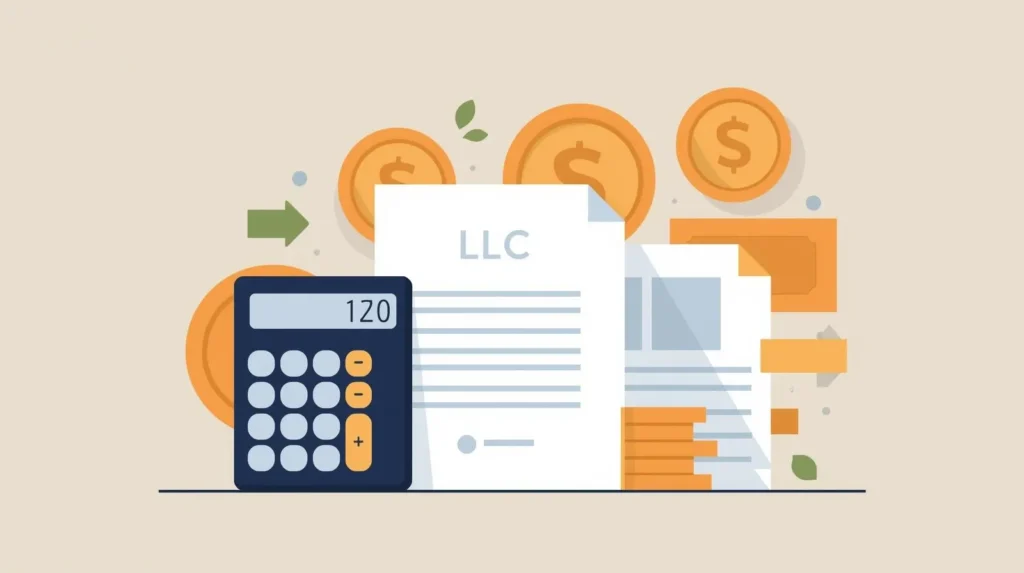
Here is a simple breakdown of common California LLC costs:
| Expense | Estimated Cost |
|---|---|
| California Articles of Organization | $70 |
| California Statement of Information | $20 |
| California annual franchise tax | $800 |
| Name reservation, if needed | $10 |
| Agent for service of process | Varies |
| EIN from IRS | Free |
| Operating agreement | Free to paid, depending on provider |
| Business licenses and permits | Varies |
| Additional LLC fee based on income | Varies |
| LLC formation service, if used | Varies |
The minimum state filing cost to form a California LLC is commonly $70, but the real cost is higher once you include the Statement of Information and the annual franchise tax.
Your total cost can increase if you reserve a name, hire an agent service, use an LLC formation company, need business licenses, or pay for tax and legal help.
How Long Does It Take to Start an LLC in California?
The timeline depends on how you file and whether your information is complete.
Online filing is usually faster than mail filing.
If your LLC name is available and your filing details are accurate, the core formation can move smoothly.
The main steps include:
• Choose your LLC name
• Appoint an agent for service of process
• File the Articles of Organization
• Create an operating agreement
• Get your EIN
• Open a business bank account
• File the Statement of Information
• Handle tax and license requirements
• Track franchise tax deadlines
The state filing is only one part of starting a business.
Banking, tax registration, business licensing, permits, insurance, bookkeeping, and local approvals may take more time.
Common Mistakes to Avoid?
1. Choosing a Name Without Checking Availability?
Do not assume your preferred name is available.
Check California business records first.
If your name is already taken or too similar to another business, your LLC filing may be rejected.
2. Using the Wrong Agent Address?
Your agent for service of process needs a real California street address.
A P.O. box alone is not enough.
If the agent information is incorrect, your filing can run into problems.
3. Forgetting the Operating Agreement?
California LLCs are expected to have an operating agreement.
Do not skip this step, even if you are the only owner.
4. Choosing the Wrong Management Structure?
Know whether your LLC will be managed by one manager, more than one manager, or all members before filing.
This affects who has authority to run the business.
5. Missing the Statement of Information?
California LLCs generally need to file the first Statement of Information within 90 days after formation.
Missing it can create penalties and good standing problems.
6. Forgetting the $800 Franchise Tax?
Many new owners focus only on the $70 filing fee.
California LLCs commonly have an $800 annual franchise tax requirement.
Budget for this before forming the LLC.
7. Applying for the EIN Before Forming the LLC?
Form the LLC first.
Then apply for the EIN.
This keeps your legal business name and tax records consistent.
8. Mixing Personal and Business Finances?
Open a separate business bank account.
Do not run your LLC through your personal account.
This creates accounting problems and can weaken your liability protection.
9. Ignoring Local Licenses?
A California LLC does not automatically give you every license needed to operate.
Check city, county, state, and industry rules before launching.
10. Assuming Another State Is Automatically Better?
Some California business owners think forming in another state avoids California rules.
If your business operates in California, you may still need to register and pay California taxes.
For many California-based businesses, forming in California is simpler.
Is California a Good State for an LLC?
Yes, California can be a good state for an LLC if you live or do business there.
It has a huge customer market, strong economic activity, and a structure that works well for many types of businesses.
California is especially practical for consultants, ecommerce sellers, contractors, real estate investors, restaurants, agencies, creative professionals, local service providers, family businesses, freelancers, tech companies, and online entrepreneurs based in the state.
The main downside is cost.
California LLCs generally have higher ongoing costs than LLCs in many other states because of the $800 annual franchise tax and possible additional fees.
Still, if your business actually operates in California, forming somewhere else may not save you much. You may still need to register as a foreign LLC in California and follow California tax and compliance rules.
For California-based business owners, forming in California usually makes the most sense.
Final Thoughts
Starting an LLC in California is straightforward, but the ongoing costs and filings deserve attention.
First, choose a valid business name. Then appoint an agent for service of process with a California street address. After that, file your Articles of Organization and pay the required filing fee.
Once your LLC is approved, create an operating agreement, get your EIN, open a business bank account, and file the Statement of Information.
You should also understand the California franchise tax requirement. The $800 annual franchise tax is one of the biggest costs new LLC owners need to plan for.
The goal is not only to form the LLC quickly.
The goal is to form it correctly and understand what it will cost to maintain.
A well-formed California LLC can give you liability protection, cleaner finances, stronger credibility, and a better foundation for growth.
If you are serious about building a business in California, forming an LLC is one of the smartest first steps.