
Starting an LLC in Delaware is a popular choice for business owners seeking a flexible legal structure, strong business laws, and a state well-known for entity formation.
Delaware is often used by startups, holding companies, ecommerce businesses, consultants, real estate investors, online entrepreneurs, agencies, investment-related businesses, and founders seeking a clean, respected business structure.
But here is the part many beginners miss.
Delaware is not automatically the best state for every business.
If you live and operate in another state, you may still need to register your Delaware LLC as a foreign LLC in your home state. That can add extra filing fees, registered agent costs, taxes, and compliance work.
So, Delaware can be a smart choice, but it should be chosen for the right reason.
Delaware LLCs are formed by filing a Certificate of Formation with the Delaware Division of Corporations.
The state filing fee is $110, and Delaware LLCs must pay an annual tax of $300. Delaware LLCs do not file an annual report, but the annual tax is due by June 1 each year.
What Is an LLC?
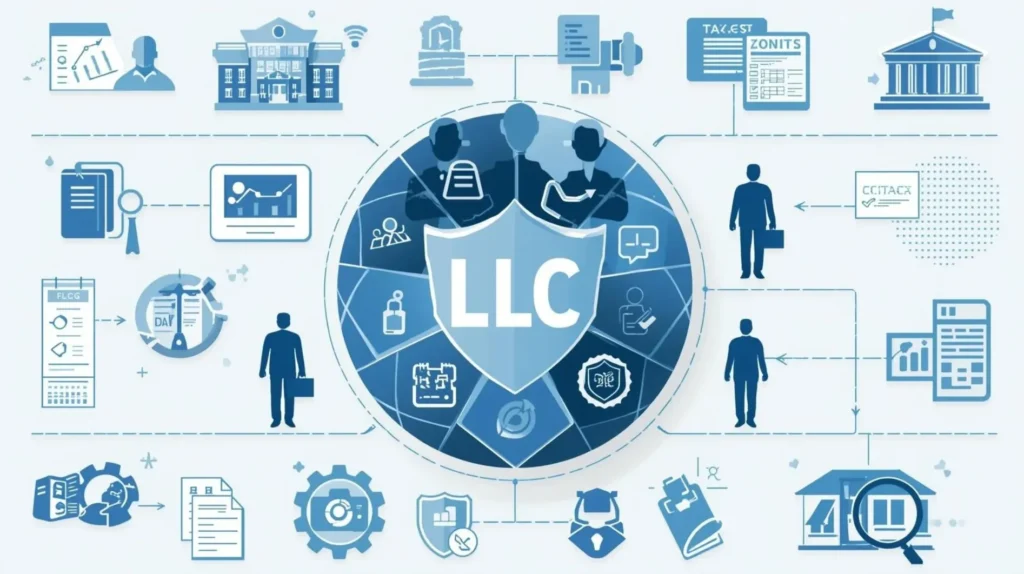
An LLC, or Limited Liability Company, is a legal business structure that separates your business from you personally.
In simple words, your LLC becomes its own legal entity.
That means your business can open bank accounts, sign contracts, receive payments, own assets, and take on business obligations under its own name.
The main benefit is liability protection.
If your Delaware LLC faces business debts, lawsuits, or legal claims, your personal assets are generally better protected, as long as you run the LLC correctly.
LLCs are also flexible.
They can be owned by one person, multiple people, another company, or even foreign owners in many cases. They can also choose different tax treatments depending on the business situation.
For many business owners, an LLC gives a useful mix of protection, flexibility, and simplicity.
Why Start an LLC in Delaware?
Delaware is one of the most well-known states for business formation.
Many founders choose Delaware because of its business-friendly legal system, flexible LLC laws, privacy appeal, and strong reputation with investors, attorneys, and business service providers.
Some key benefits include:
• Personal liability protection
• Flexible LLC structure
• Strong business law reputation
• No Delaware annual report for LLCs
• Popular choice for startups and holding companies
• Useful for online and multi-state businesses
• Flexible management options
• Good fit for single-member and multi-member LLCs
Delaware can be especially attractive if you plan to raise investment, build a scalable startup, hold assets, operate online, or use a formal business structure that many banks, investors, and legal professionals understand.
However, if your business is small and operates only in your home state, Delaware may not always save money.
For example, if you form in Delaware but actually operate in California, Texas, Florida, New York, or another state, you may need to register as a foreign LLC there, too.
That means two states, two compliance systems, and possibly two registered agents.
How to Start an LLC in Delaware?
To start an LLC in Delaware, you need to choose a legal business name, appoint a Delaware registered agent, file the Certificate of Formation, create an operating agreement, get an EIN from the IRS, open a business bank account, pay the Delaware annual tax, and check business license or tax requirements.
The actual state formation document is short compared with those of many states.
Delaware mainly requires the LLC name, registered office, registered agent, and the signature of an authorized person.
Still, forming the LLC is only the first part.
You also need to handle banking, taxes, internal records, licenses, ownership rules, and ongoing compliance.
Step 1: Choose a Name for Your Delaware LLC

How Do You Choose a Business Name?
Your first step is choosing a valid name for your Delaware LLC.
Your LLC name must follow Delaware naming rules.
Your Delaware LLC name should:
• Be distinguishable from other business names on record
• Include “Limited Liability Company,” “LLC,” or “L.L.C.”
• Avoid misleading wording
• Avoid words that make the company sound like a government agency
• Avoid restricted terms unless you have proper approval
• Match the professional image you want your business to build
The Delaware Certificate of Formation instructions state that the LLC name must include “Limited Liability Company,” “L.L.C.,” or “LLC.”
Before filing, check whether your preferred name is available.
A name may sound perfect, but if another Delaware business already uses it or has something too similar, your filing may be rejected.
What Makes a Good LLC Name?
A good LLC name should be simple, professional, and flexible.
Try to choose a name that is:
• Easy to spell
• Easy to pronounce
• Relevant to your business
• Strong for branding
• Available as a domain name
• Not too similar to another company
• Flexible enough for future growth
Avoid choosing a name that is too narrow.
For example, if your business may expand beyond one product, one city, or one service, do not lock yourself into a name that limits growth.
Your LLC name may appear on contracts, invoices, bank records, tax forms, payment accounts, investor documents, business cards, and legal agreements.
Choose something that still works when the business grows.
Should You Reserve Your Delaware LLC Name?
Delaware allows name reservation if you are not ready to form your LLC yet.
This step is optional.
If you are ready to file the Certificate of Formation now, you usually do not need to reserve the name separately.
Name reservation is useful when you found a name you like but need extra time before officially forming the LLC.
Step 2: Appoint a Delaware Registered Agent
What Is a Registered Agent?
Every Delaware LLC must have a registered agent.
A registered agent is the person or company that receives legal notices, official mail, tax notices, and service of process for your LLC.
This role matters because the state and courts need a reliable way to contact your business.
If your LLC is sued or receives official documents, the registered agent receives them first.
Who Can Be Your Delaware Registered Agent?
Your registered agent must have a physical address in Delaware.
The Certificate of Formation instructions ask for the name and address of the registered agent located in Delaware.
You can usually use:
• A Delaware resident
• A Delaware business authorized to act as registered agent
• A professional registered agent service
• Yourself, only if you have a qualifying physical Delaware address
A P.O. box alone is not enough.
The registered agent needs a real Delaware street address where legal and official documents can be delivered.
Should You Hire a Registered Agent Service?
For many Delaware LLC owners, yes.
This is especially true if you do not live in Delaware.
If you are forming a Delaware LLC from another state or another country, you will usually need a professional Delaware registered agent.
A registered agent service can help with:
• Keeping a Delaware address on record
• Receiving legal documents
• Scanning and forwarding notices
• Compliance reminders
• Privacy support
• Multi-state business setup
If you are a non-resident or out-of-state founder, this step is not optional in practice. You need someone in Delaware who can receive official documents for the LLC.
Step 3: File the Delaware Certificate of Formation
How Do You File Your LLC Paperwork?
This is the step that officially creates your Delaware LLC.
To form the LLC, you file a Certificate of Formation with the Delaware Division of Corporations.
The state filing fee is $110.
Once Delaware accepts your filing, your LLC officially exists.
What Information Do You Need to File?
Delaware’s Certificate of Formation is shorter than many other states’ LLC formation documents.
It usually asks for:
• LLC legal name
• Delaware registered office address
• Delaware registered agent name
• Authorized person signature
• Printed name of signer
Unlike some states, Delaware does not require you to list all members or managers on the basic Certificate of Formation.
That is one reason many business owners like Delaware.
The public formation document can be simple, while ownership and management details are usually handled privately in the operating agreement.
Should You File Online or by Mail?
Delaware allows business formation filings through available state filing methods, including online and paper filing options.
Online filing is usually more convenient for many business owners.
Paper filing can still work, but it may take longer depending on processing times.
If speed matters, Delaware also offers expedited processing options for additional fees. The Certificate of Formation instructions mention that expedited services are available and that certified copies can be requested for an additional fee.
How Long Does It Take to Form a Delaware LLC?
Processing time depends on the filing method, workload, and whether you choose expedited service.
If you need your LLC quickly for banking, contracts, investors, licensing, or a launch deadline, consider expedited processing.
If there is no rush, standard filing may be enough.
Do not wait until the last minute if your business depends on having the LLC approved by a specific date.
Step 4: Create a Delaware LLC Operating Agreement
What Is an Operating Agreement?
An operating agreement is an internal document that explains how your LLC is owned and managed.
Delaware does not require you to file this document with the state, but you should still create one.
This is especially important in Delaware because the Certificate of Formation is very basic.
The operating agreement is where you define the real business rules.
An operating agreement can cover:
• Who owns the LLC
• Ownership percentages
• Member contributions
• Profit and loss sharing
• Management structure
• Voting rights
• Member responsibilities
• Rules for adding new members
• Rules for selling ownership
• What happens if a member leaves
• How disputes are handled
• How the LLC can be closed
Why Does an Operating Agreement Matter?
An operating agreement helps prevent confusion.
For a single-member LLC, it confirms that you own and control the company.
For a multi-member LLC, it becomes even more important because it explains each member’s rights, duties, ownership percentage, and profit share.
Without a written agreement, disagreements can become expensive and stressful.
Questions like these should be answered clearly:
• Who owns what percentage?
• Who can sign contracts?
• Who approves major expenses?
• How are profits shared?
• What happens if a member leaves?
• Can a member sell their interest?
• What happens if the company closes?
Banks, lenders, investors, and business partners may also ask for your operating agreement.
Step 5: Get an EIN From the IRS

How Do You Get an EIN for a Delaware LLC?
After your Delaware LLC is approved, you should get an Employer Identification Number, also called an EIN.
An EIN is a federal tax ID number for your business.
You may need an EIN to:
• Open a business bank account
• Hire employees
• File certain federal taxes
• Apply for business credit
• Set up payroll
• Work with payment processors
• Register for tax accounts
• Keep business finances separate
You can usually get an EIN directly from the IRS for free.
Many formation companies charge extra for EIN filing, but many business owners can complete this step themselves.
When Should You Apply for an EIN?
In most cases, form the LLC first and then apply for the EIN.
That way, your EIN is connected to the correct legal business name.
If you apply too early and your Delaware filing changes or gets rejected, your tax records can become messy.
The best order is:
• File the Certificate of Formation
• Wait for approval
• Create your operating agreement
• Apply for the EIN
• Open your business bank account
Step 6: Open a Business Bank Account
Why Is a Business Bank Account Important?
Once your Delaware LLC is approved and you have your EIN, open a separate business bank account.
This is one of the most important steps after formation.
Do not mix personal and business money.
A separate bank account helps prove that your LLC is separate from you personally. It also makes bookkeeping, taxes, payments, and financial reporting much easier.
Most banks may ask for:
• Approved Certificate of Formation
• EIN confirmation letter
• Operating agreement
• Personal ID
• Business address information
• Ownership information
• Registered agent details
If your LLC has multiple members, the bank may also ask who has authority to open and manage the account.
Can a Non-Resident Open a Bank Account for a Delaware LLC?
Yes, but it can be more complicated.
Some banks require the owner or authorized signer to appear in person. Others may allow online account opening depending on the business type, location, ownership structure, and documentation.
Non-U.S. owners may need additional documents.
Common requirements may include:
• Passport
• EIN confirmation
• Delaware formation documents
• Operating agreement
• U.S. business address or mailing address
• Ownership details
• Proof of identity
Banking is often one of the harder parts for non-resident Delaware LLC owners, so plan this step early.
Step 7: Pay the Delaware Annual Tax

Does Delaware Require an Annual Report for LLCs?
No, Delaware LLCs do not file an annual report.
That is one of the reasons Delaware is attractive for LLCs.
However, Delaware LLCs must pay an annual tax.
The Delaware annual tax for LLCs is $300. It is due on or before June 1 each year.
What Happens If You Miss the Delaware Annual Tax?
If you miss the annual tax deadline, Delaware charges a penalty and interest.
Delaware states that failure to pay the required annual tax results in a $200 penalty plus 1.5% interest per month on the tax and penalty.
That can get expensive quickly.
The annual tax is not optional.
Even if your LLC has no income, the tax may still be due if the LLC is active on Delaware records during the applicable year.
Is the Delaware Annual Tax Prorated?
No, Delaware says there is no proration on alternative entity taxes, and annual taxes are assessed if the entity is active in Division of Corporations records at any time during the year.
This means timing matters.
If you form near the end of the year, you should understand how the annual tax applies.
Step 8: Check Delaware Business Licenses and Taxes
Does a Delaware LLC Need a Business License?
Forming an LLC does not automatically give you every license needed to operate.
If your business operates in Delaware, you may need a Delaware business license, local license, professional license, tax registration, or industry-specific permit.
Your licensing needs depend on what your business does and where it operates.
You may need:
• Delaware business license
• Local city or county license
• Professional license
• Industry-specific permit
• Employer tax registration
• Gross receipts tax registration
• Sales-related registration, if applicable
• Health department permit, if applicable
• Zoning approval, if operating from a physical location
For example, restaurants, contractors, salons, real estate businesses, healthcare providers, childcare businesses, food businesses, retail stores, and professional services may need extra approvals.
Does Delaware Have State Income Tax?
Delaware has state tax rules that may apply depending on your business activity, income, and structure.
If your LLC does business in Delaware, it may have state tax obligations.
If your Delaware LLC operates outside Delaware, your home state or operating state may also tax the business.
This is where many people get confused.
Forming in Delaware does not automatically mean your business only follows Delaware tax rules.
If you operate in another state, that other state may still expect registration, taxes, reports, and compliance.
How Much Does It Cost to Start an LLC in Delaware?
Here is a simple breakdown of common Delaware LLC costs:
| Expense | Estimated Cost |
|---|---|
| Delaware Certificate of Formation | $110 |
| Delaware annual LLC tax | $300 |
| Certified copy, if requested | $50 |
| Registered agent service | Varies |
| Name reservation, if needed | Varies |
| EIN from IRS | Free |
| Operating agreement | Free to paid, depending on provider |
| Delaware business license, if needed | Varies |
| Foreign LLC registration in another state, if needed | Varies |
| LLC formation service, if used | Varies |
The minimum state filing cost to form a Delaware LLC is $110, but the real yearly maintenance cost should include the $300 annual tax and registered agent service if you do not have your own qualifying Delaware address.
How Long Does It Take to Start an LLC in Delaware?
The timeline depends on how you file and whether you choose expedited processing.
The main steps include:
• Choose your LLC name
• Appoint a Delaware registered agent
• File the Certificate of Formation
• Create an operating agreement
• Get your EIN
• Open a business bank account
• Check license and tax requirements
• Pay Delaware annual tax by June 1 each year
The filing itself can be simple.
The full business setup may take longer because banking, licenses, tax registrations, foreign qualification, and internal documents all take extra time.
Common Mistakes to Avoid?
1. Choosing Delaware Without Understanding Foreign Registration?
Delaware is popular, but it is not automatically the cheapest choice.
If your business operates in another state, you may need foreign LLC registration there.
That can mean extra fees, another registered agent, and another compliance system.
2. Thinking Delaware LLCs Have No Annual Costs?
Delaware LLCs do not file annual reports, but they do pay the $300 annual tax.
Do not confuse “no annual report” with “no annual payment.”
3. Missing the June 1 Annual Tax Deadline?
The Delaware annual LLC tax is due by June 1.
Missing it can lead to a $200 penalty plus monthly interest.
4. Using the Wrong Registered Agent?
Your registered agent must be located in Delaware.
If you do not live in Delaware or do not have a qualifying Delaware address, use a professional registered agent service.
5. Skipping the Operating Agreement?
Delaware’s Certificate of Formation is short.
That makes the operating agreement even more important because it explains the real ownership and management rules.
6. Applying for the EIN Before Formation?
Form the LLC first.
Then apply for the EIN using the approved Delaware LLC name.
7. Mixing Personal and Business Finances?
Open a separate business bank account.
Do not run your Delaware LLC through your personal account.
8. Forgetting Business Licenses?
Formation does not equal permission to operate.
Check licensing rules based on where your business actually operates.
9. Assuming Delaware Avoids Other State Taxes?
If your business operates outside Delaware, another state may still tax or regulate your business.
Forming in Delaware does not erase your obligations elsewhere.
Is Delaware a Good State for an LLC?
Yes, Delaware can be a good state for an LLC, especially if you want flexible business laws, privacy appeal, and a respected formation state.
It can be useful for:
• Startups
• Holding companies
• Online businesses
• Multi-state businesses
• Investment-related businesses
• Non-resident founders
• Businesses planning to raise capital
• Companies that want a well-known legal environment
But Delaware is not always the best choice for a small local business.
If you live and operate only in your home state, forming there may be simpler and cheaper.
Delaware becomes more attractive when you have a specific reason to use it, such as investor expectations, legal flexibility, privacy concerns, asset holding, or multi-state planning.
Final Thoughts
Starting an LLC in Delaware is straightforward, but you need to understand both the benefits and the ongoing costs.
First, choose a valid Delaware LLC name. Then, appoint a Delaware-registered agent and file the Certificate of Formation.
The filing fee is $110. After approval, create an operating agreement, get your EIN, open a business bank account, and check license or tax requirements.
You should also remember the Delaware annual LLC tax.
Delaware LLCs do not file annual reports, but they must pay a $300 annual tax by June 1 each year. Missing that deadline can lead to penalties and interest.
The goal is not only to form the LLC quickly.
The goal is to form it correctly and understand what it will cost to maintain.
If Delaware fits your business situation, it can be a strong and flexible place to form an LLC.